
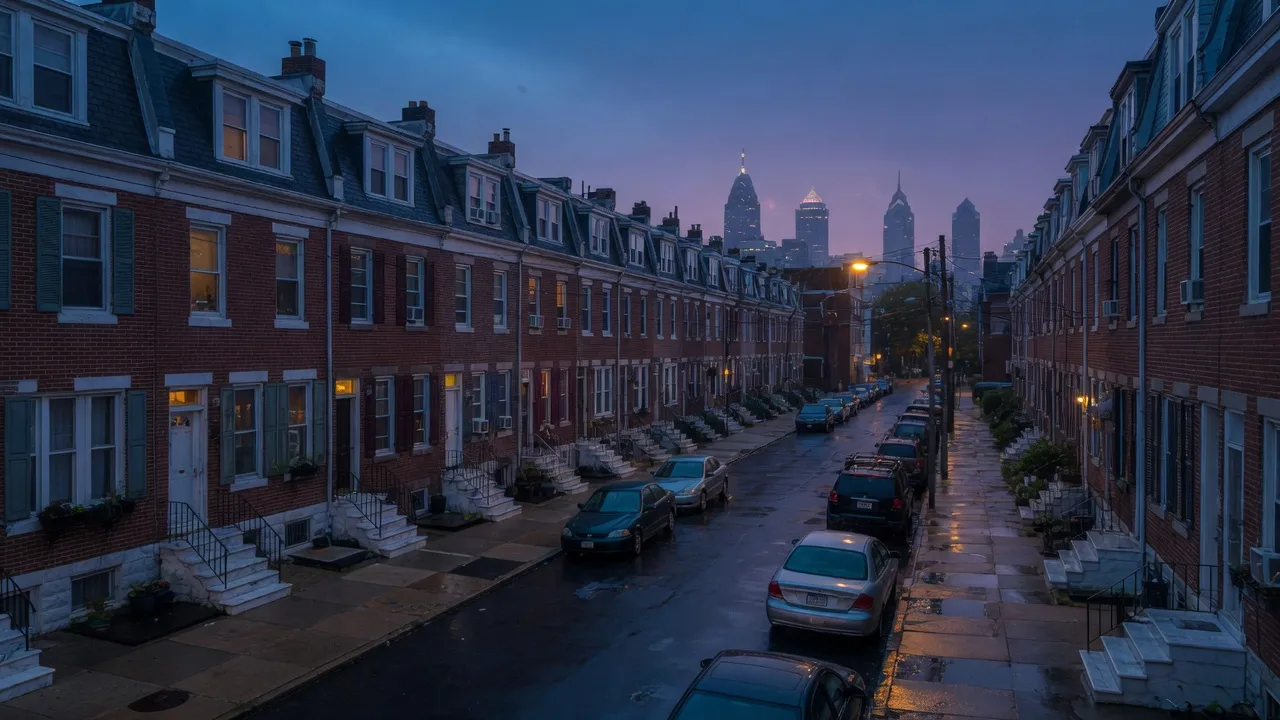
Most Philadelphia homes are old. The median unit in the city was built around 1949, roughly 40 percent of the stock predates 1940, and rowhouses make up the majority of buildings. Old does not mean broken: it means you buy condition, systems, and maintenance history instead of newness.
This is usually the first question a buyer from the West Coast or the Sun Belt asks, and it deserves a straight answer. I'm Craig Lerch, a licensed real estate broker with eXp Realty who works the Philadelphia metro, in the city and each of the surrounding counties. Every figure below was checked against its primary source in September 2026; the Census issues new estimates every year, so re-check anything you are about to rely on.
The median Philadelphia home was built around 1949
For the city of Philadelphia, the median year built is around 1949 on the Census Bureau's American Community Survey, and about 40 percent of the city's housing units went up before 1940. Pennsylvania's housing stock is the fourth oldest in the country, and Philadelphia County is the oldest county in the state (Census ACS 5-year estimates; Pennsylvania Association of Realtors analysis of 2022 ACS data, verified September 2026). Redfin measured the median age of a home sold in the Philadelphia metro at 61 years in 2024, among the oldest of any metro it tracks, as reported by The Philadelphia Inquirer in May 2025 (verified September 2026). The city holds roughly 763,000 housing units total (ACS 2024 1-year estimate, verified September 2026).
Two things follow. First, a median hides the range: blocks of pre-1900 brick sit a few streets from 2000s infill, so the number that matters for a specific house is the year built on its county assessment record, not the ZIP or the town on the listing. Second, age describes the building, it does not sentence it: whether a house is tight, dry, and current on its systems is a maintenance question, not a birthday question.
The rowhouse is the default Philadelphia building
Philadelphia is the American city of the rowhouse. In the 2010 Census, about 60 percent of the city's housing units were single-family attached homes, and recent ACS-based counts put the share around 55 to 56 percent of units; the Healthy Rowhouse Project, which also counts rowhouse buildings holding more than one unit, puts rowhouses at roughly 70 percent of the city's housing stock (2010 Census; ACS-based analyses; Healthy Rowhouse Project, verified September 2026). Detached single-family homes, the default almost everywhere else, are about 8 percent of Philadelphia's units.
Practical consequences: your outer walls may be party walls shared with the neighbors, the front door usually opens right onto the sidewalk with a short set of steps up to it, and the outdoor space is a rear yard or court rather than a front lawn. A classic rowhouse is two or three stories over a basement, and on most pre-1950 blocks there is no driveway: the car lives on the street, and the block's own parking rules are worth checking.
The systems question: cooling, heating, basements
Age shows up first in systems, not walls. Nationally, about 88 percent of households use some form of air conditioning and about 67 percent use central air or a central heat pump (U.S. Energy Information Administration, 2020 Residential Energy Consumption Survey, verified September 2026). Census estimates put air conditioning access in Philadelphia's occupied homes near 100 percent, but in the city's older stock that frequently means window units rather than ducted central air (Census housing estimates reported in May 2026, verified September 2026). So 'does it have central air?' and 'can it be cooled?' are different questions. Many owners run ductless mini-splits or good window units instead of paying to retrofit ducts through brick and plaster.
Basements are standard in Philadelphia rowhouses, and almost all of them have one, but in older rows most are unfinished utility space with modest ceiling height, and the city sits on a high water table, so moisture management, a dehumidifier or sump pump, is part of routine ownership (local rowhouse building sources, verified September 2026). Some owners finish it into living space; treat that as a project you might take on, not finished square footage on day one. Heat is usually a gas-fired system, and the furnace's age should appear on the seller's disclosure and get confirmed by your inspection.
Across the metro, the stock gets younger the farther out you go
The 1949 median is the city's number, not the region's. Statewide, Pennsylvania's median construction year is 1964, and the surrounding counties of Montgomery, Bucks, Chester, and Delaware hold much of the newer detached stock (PA Association of Realtors analysis of 2022 ACS data, verified September 2026). South Jersey runs newer still: the average New Jersey home was built around 1972 (ACS-based housing data via bestneighborhood.org, verified September 2026). Northern Delaware is newer again on average: one ACS-based analysis places Delaware's median housing age in its early thirties, meaning much of that stock dates to the mid-1980s and later (Fixr analysis of 2019 ACS data, verified September 2026). Wilmington's brick rowhouse core is the regional exception, comparable in age to Philadelphia's. The precise year for the parcel you are bidding on is printed on the county assessment record in every one of these states, and that record, not a regional average, is what you bring to the offer.
What surprises a buyer from California
California's median home was built in 1976 and only about 54 percent of California households have central air conditioning (Census ACS via CA YIMBY; EIA 2020 RECS, verified September 2026). Against that baseline, Philadelphia's stock is a generation older, rowhouses replace the detached house, and 'no central air' means window units or mini-splits rather than no cooling at all. Three things come up on nearly every call with a California buyer. First, the garage is the exception on a rowhouse street, so parking is usually on-street and the block's rules apply. Second, attached walls are shared walls: your neighbor's renovation timeline is your noise timeline, and there is no homeowners association board to referee it. Third, the basement is a real room, almost always unfinished, instead of the crawl space or slab most California buyers picture under the house. And the reverse surprise runs the other way: Philadelphia summers are hot and humid, so whatever the listing says about air, budget a line item for making the sleeping rooms cool by July.
What most people get wrong
- Old home means falling down. Age is not condition. A renovated 1920 rowhouse can be tighter than an unmaintained build from the mid-1990s; the inspection and the utility history tell you which one you are buying.
- No central air means no air conditioning. Older stock often cools with window units or ductless mini-splits, and the right question is what the seller actually ran in July and August.
- A rowhouse is a rental building. A rowhouse is a single dwelling in an attached row, with its own deed and tax record; the building type is not the occupancy type.
- The basement is finished bonus space like a condo rec room. Most are unfinished utility space with moisture to manage; confirm what is actually usable before you price it into an offer.
- Newer always means less risk. Newer changes what can break, it does not remove risk; the mid-1990s house gets the same inspection as the 1920 one.
How to read an older house before you buy
- Open the county assessment record for the parcel and read the printed year built and building type; in Philadelphia that is the Office of Property Assessment, and Montgomery, Bucks, Chester, and Delaware counties each run their own assessment site, with New Jersey and Delaware equivalents (verified September 2026).
- Ask the seller's disclosure for the age of the roof, furnace, water heater, and windows, and whether the electrical panel and plumbing have been updated.
- Book a licensed home inspection written for older urban stock, and add a sewer scope: aging clay sewer laterals are a real cost center on rowhouse blocks.
- Ask for utility history: two summers and two winters of bills say more about comfort than a thermostat setting in a staged house.
- See the street twice, once midweek in daylight and once on a weekend evening, and check parking, truck traffic, and construction.
Your concrete next step
Pull the year built and building type from the assessment record for each house on your shortlist, then set your systems floor before you tour: what is non-negotiable about cooling, parking, stairs, and basement, and what you are willing to pay to change. Ask for the neighborhood-criteria worksheet when you reach out, and it turns those answers into a scored list you can reuse on every house and every block. The booking line below opens the calendar.